EU Digital Product Passport (DPP)
Tilkal - The EU Digital Product Passport (DPP) introduces new requirements for product-level data, traceability, and transparency across supply chains, reshaping how companies manage product information throughout the lifecycle.

Last checked against the official text: 2 September 2026 by Perrine Delobelle
Primary source: Regulation (EU) 2024/1781 (ESPR), CELEX 32024R1781 — eur-lex.europa.eu/eli/reg/2024/1781
Related texts: Regulation (EU) 2023/1542 (Batteries) · Regulation (EU) 2024/3110 (CPR) · Regulation (EU) 2025/2509 (Toy Safety)
What. Aims at enabling the digital sharing of key product information related to sustainability and circularity, across all the relevant economic actors.
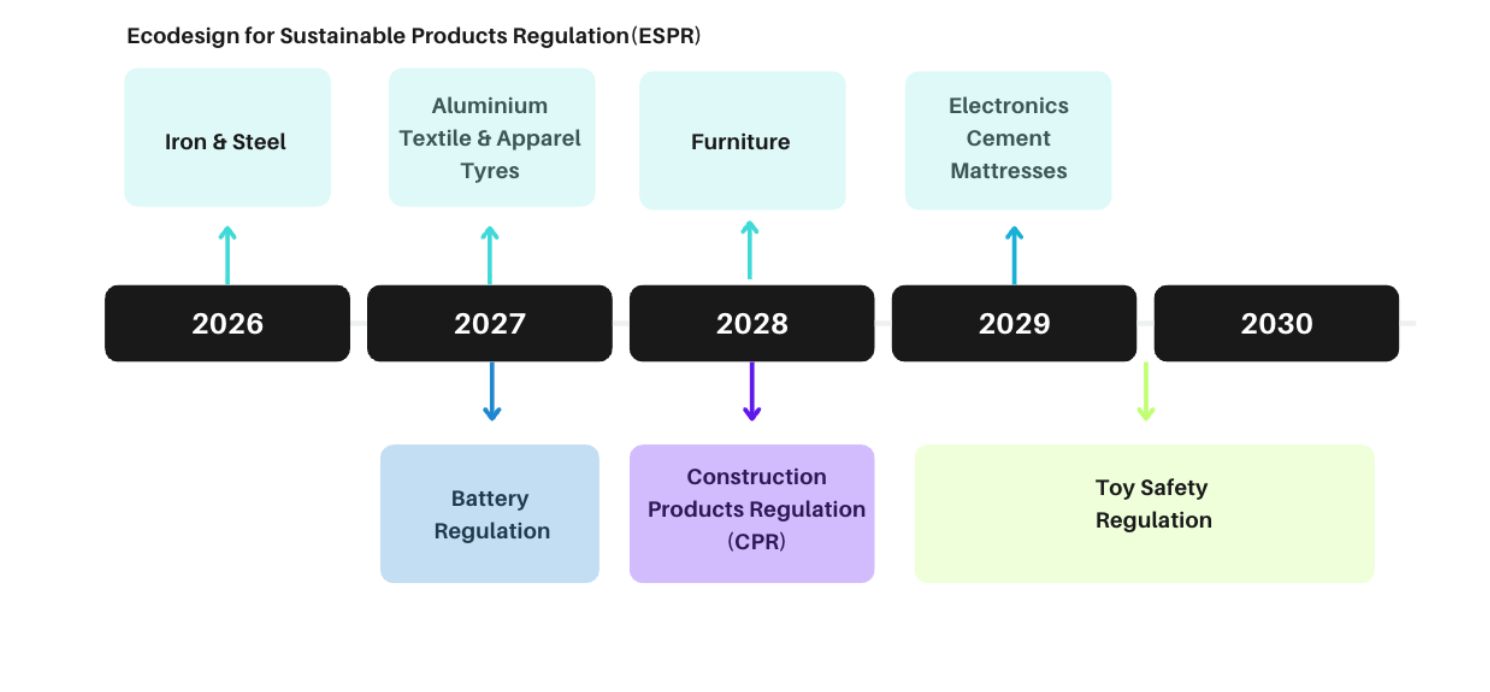
When. The DPP will be rolled out one sector at a time starting from 2027. Batteries – specifically industrial and electric vehicle will serve as the test case.
Products. Any physical good, including components and intermediates products, placed on the EU market or put into service, except for food, feed, and medicinal products. It will eventually apply to at least 30 product categories.
Overview
The Digital Product Passport (DPP) is part of the Sustainable Product Regulation proposal adopted on March 30th 2022 by the European Commission and released under the framework of the EU Green Deal. The EU Digital Product Passport (DPP) introduces new requirements for product-level data, traceability, and transparency across supply chains, reshaping how companies manage product information throughout the lifecycle.
What is a DPP?
A DPP is a structured digital collection of product-related information, including data on traceability, sustainability, and circularity performance, whose objective is to facilitate circular value retention and extraction activities such as reuse, remanufacturing, and recycling.
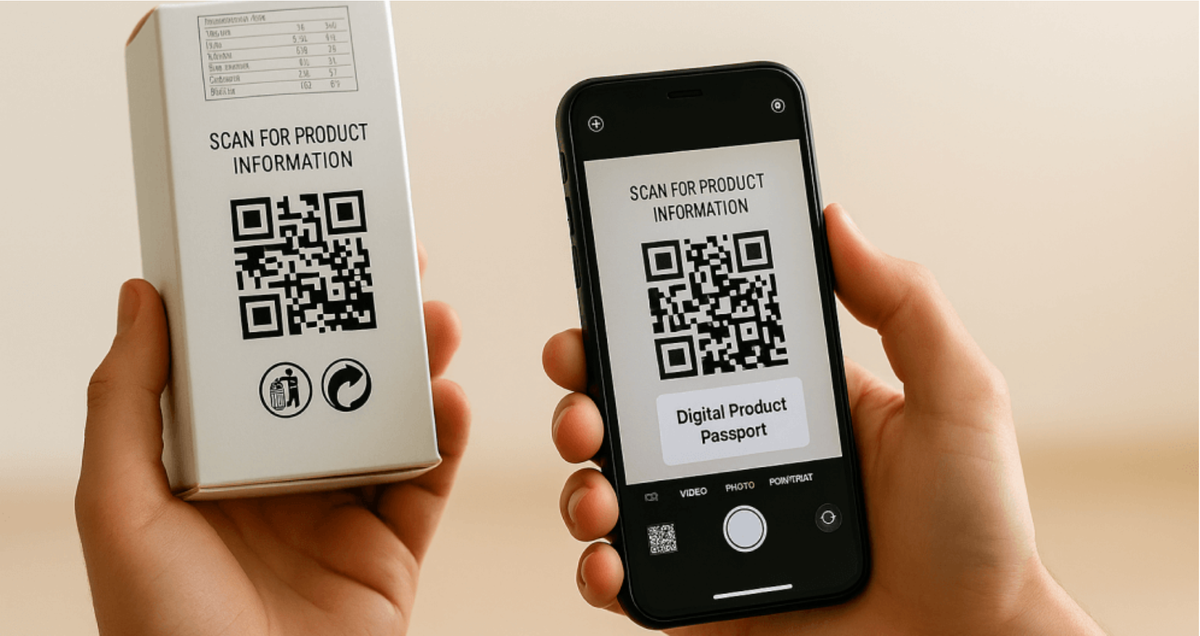
The passport must be connected via a data carrier to a unique product identifier, physically present on the product, its packaging, or on the documentation accompanying the product.
How could DPPs impact your business?
The regulation sets up new duties and rights for manufacturers, importers and distributors, materials suppliers, repair professionals, recyclers, governments and public authorities, and consumers and end-users.
Companies will benefit from increased visibility and traceability over a product’s full history, valuable insights into their environmental footprint, reward for transparent processes, acceleration into the achievement of sustainability goals, and proof of compliance.
Main expectations
The EU is finalizing the DPP’s product-group data lists and definitions. These will be set in delegated acts (such as the upcoming 2027 textiles act) and supported by ongoing standardization efforts. However, here are some examples of what the DPP is likely to include:
- Basic product data: product name, make, model, batch number, manufacturing date, and warranty details.
- Material data: origins of raw materials and components, plus the suppliers involved in sourcing.
- Ownership data: details on current and past owners (especially relevant for long-lasting products that can be resold).
- Repair data: information about the overall repairability of the product, plus specific repair events and reasons.
- Sustainability data: such as the carbon footprint of the manufacturing and distribution processes, as well as the use phase.
Zoom on the Battery Passport
Battery passports will be introduced gradually under the EU Battery Regulation starting with EV, LMT and industrial batteries >2 kWh from February 2027, until their full implementation by 2029 when every industrial and electric vehicle battery will have to come with a digital product passport.
The required information links to safety requirements and targets for recycled content in batteries. More specifically, data must be provided for:
- Material sourcing
- Carbon footprint
- Percentages of recycled materials used
- Battery durability
- Repurposing and recycling guidelines
A key element in several upcoming regulations
DPPs are also a central component of various EU regulations that aim at driving transparency in value chains. Their implementation is a key aspect for the overall compliance of businesses subject to multiple laws. For example:
- New EU Battery Regulation: the first DPP will be mandatory in 2027.
- Ecodesign for Sustainable Products Regulation (ESPR): enforced in July 2024.
- Construction Products Regulation (CPR): entered into force in January 2025.
- Toy Safety Regulation: entered into force in January 2026, will apply on 1 August 2030.
But European regulations (ESPR) are also pushing governments and companies outside the EU to prepare — many initiatives being driven by access to the European market.
Several countries are starting with targeted obligations (e.g., steel in the UAE) or sector-specific guidelines (textiles in Australia). Priority sectors are construction, batteries, textiles, and electronics are the most advanced — these sectors should be monitored first (Turkey, China, Vietnam).
What is the timeline for EU DPP implementation?
Six of the eight key standards for the IT framework of the DPP have now been published, marking a major step towards making the Digital Product Passport fully operational. These standards define how products are digitally identified, how physical items are linked to their digital twins, and how data is structured, shared, secured, and exchanged across supply chains throughout the product lifecycle, with interoperability at the core. The remaining two standards are expected very soon. Coordinated with ISO and UNECE, this framework aims to support a consistent global rollout and enable the DPP’s role in advancing a digital circular economy.
The EU Digital Product Passport Registry went live on July 19, 2026, marking another important milestone in the implementation of the DPP. The Registry does not host Digital Product Passports themselves. Instead, it generates a Unique Registration Identifier (URI) for registered products before they are placed on the EU market and connects stakeholders to the data source selected by the economic operator. With the Registry now operational, the focus shifts increasingly to the data and systems companies need to manage DPP information at scale — ensuring its quality, accessibility, interoperability, and traceability across the value chain.