
European Product Act (EPA) – Proposal for a New Framework Aligning Product Legislation with the Digital Era
Tilkal - The European Product Act (EPA) is a proposed legislative package resulting from the revision of the New Legislative Framework (NLF).
The EU Construction Products Regulation (CPR) 2024/3110 modernizes the 2011 framework to enhance safety, sustainability, and competitiveness in the construction sector. It introduces mandatory Digital Product Passports (DPP) for construction products to improve transparency, traceability, and…
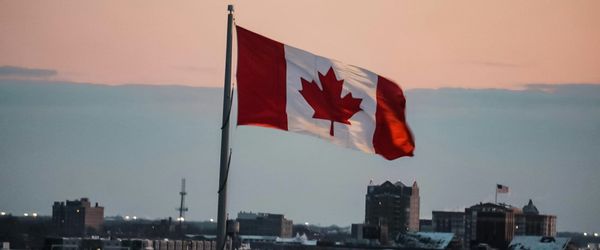
Tilkal - The Canada Modern Slavery Act requires companies to identify, prevent, and reduce the risk of forced labour and child labour in their operations and supply chains through mandatory transparency and reporting.
Tilkal - The EU RoHS Directive restricts the use of hazardous substances in electrical and electronic equipment to protect human health and the environment, and to improve the sustainability of products placed on the EU market.
Tilkal - The Fashion Sustainability and Social Accountability Act, or New York Fashion Act, positions itself within a global trend of double materiality regulations such as the European CSRD.
Tilkal - The China CSDS is a national framework for corporate sustainability and ESG disclosure, designed to standardise how companies report on ESG performance, including impacts across value chains and supply chains.
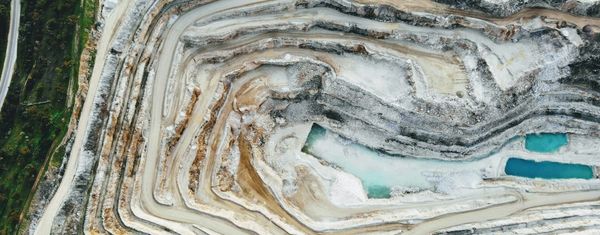
Tilkal - Vietnam’s Mineral Law regulates the management, exploration, and exploitation of mineral resources in Vietnam, with a focus on state control, environmental protection, and sustainable development.
Tilkal - Vietnam Law on Products and Goods Quality ensures product quality, safety, and traceability across goods placed on the Vietnamese market. The law explicitly incorporates Digital Product Passport (DPP) requirements.
Tilkal - Importers of goods produced in Xinjiang need to prove that the goods were not mined, produced, or manufactured, wholly or in part, using forced labor.
Tilkal - The Clean Vehicule Tax Credit incentivises the US domestic and allied-country sourcing of electric vehicle (EV) supply chains through tax credits tied to battery component manufacturing and critical mineral origin.
Tilkal - The Food Safety Modernization Act (FSMA), enacted as a response to evolving food safety challenges, aims at enhancing public health protection by strengthening the food safety system in the United States.
Tilkal - U.S. Dodd-Franck Act (sec.1502) aims at increasing supply chain transparency to reduce the financing of armed conflict by requiring disclosure on the sourcing of certain minerals.
UK
Tilkal - The UK Modern Slavery Act (MSA) aims at preventing and mitigating modern slavery, forced labor, and human trafficking in company operations and supply chains, and increasing corporate transparency.
UK
Tilkal - UK's Commercial Organisations and Public Authorities Duty (Human Rights and Environment) Bill aims at preventing human rights and environmental harms “so far as is reasonably practicable,” both in their own operations and throughout their value chains.
Turkey
Tilkal - Turkey's Batteries & Ecodesign Regulatory Framework covers battery sustainability, safety, EPR, battery passport, labeling, and ecodesign requirements for electrical and electronic products.
Switzerland
Tilkal - The Swiss Conflict Minerals and Child Labour Due Diligence Legislation aims at strengthening responsible sourcing and supply chain transparency by requiring due diligence on conflict minerals and child labour risks.
Social Responsibility
Tilkal - The Protocol of 2014 to the Forced Labour Convention, 1930, establishes international guidelines for preventing and eliminating forced labor, including mechanisms for government regulation, monitoring, and cross-border cooperation.
Europe
Tilkal - The Norwegian Transparency Act is set to promote transparency and ensure that companies respect fundamental human rights and decent working conditions throughout their supply chains.
UK
Tilkal - The London Metal Exchange (LME) Framework ensures responsible sourcing of metals through a risk-based due diligence framework aligned with OECD guidance, covering conflict, human rights, and environmental risks in upstream supply chains.
Japan
Tilkal - The Japanese Guidelines on Respecting Human Rights in Responsible Supply Chains provide general recommendations for companies on integrating human rights due diligence (HRDD) into supply chain management, inspired by international frameworks such as the EU CSDDD.
Japan
Tilkal - The Japanese Food Safety Basic Act ensures food safety and public health protection by establishing standards, monitoring systems, and responsibilities for all actors in the food supply chain.
India
Tilkal - India's BRSR Core (Business Responsibility and Sustainability Reporting Core) mandates ESG reporting for large listed companies, covering environmental protection, human rights compliance, circularity, and other sustainability-related issues.
Europe
Tilkal - The german Supply Chain Act (LkSG) places businesses under the obligation to respect human rights by implementing defined due diligence obligations.
Australia
Tilkal - The EU-Australia Partnership on Critical Raw Materials aims at strengthening cooperation between the EU and Australia to secure diversified, sustainable, and resilient supplies of critical raw materials, reducing strategic dependencies—particularly on China.